
Condensation Control Services in Newcastle upon Tyne
How the Service Helps
Condensation control from Mould Removal Newcastle has two parts. First, we confirm that condensation really is the cause, because not every damp patch needs more ventilation. Second, we deal with the mould it has already left on window reveals, wall corners and ceilings. Hard surfaces can often be cleaned and treated, while badly affected sealant, wallpaper or plasterboard may need removing and replacing. Homeowners, tenants, landlords, letting agents and businesses all use the service.
Our Assessment and Treatment Process
It begins with a discussion of what you've noticed, backed up by photographs where you have them. On a visit, we look at where the moisture and mould appear, how each room is used and heated, how steam leaves the kitchen and bathroom, and if furniture or layout is blocking airflow. Signs of a leak or water ingress are checked at the same time. Any treatment of larger areas is carried out with suitable precautions to reduce exposure and keep spores from spreading. Our process page shows how assessment, treatment and advice fit together.
What You Get at the End
There is no charge for the quote. You'll be told whether condensation is behind the problem, what we found in each room and which measures are most likely to help, and any mould that has already formed is treated. If photographs can't show enough, a damp and mould inspection comes first so the advice and price are based on what is actually there.
What Is Condensation Control?
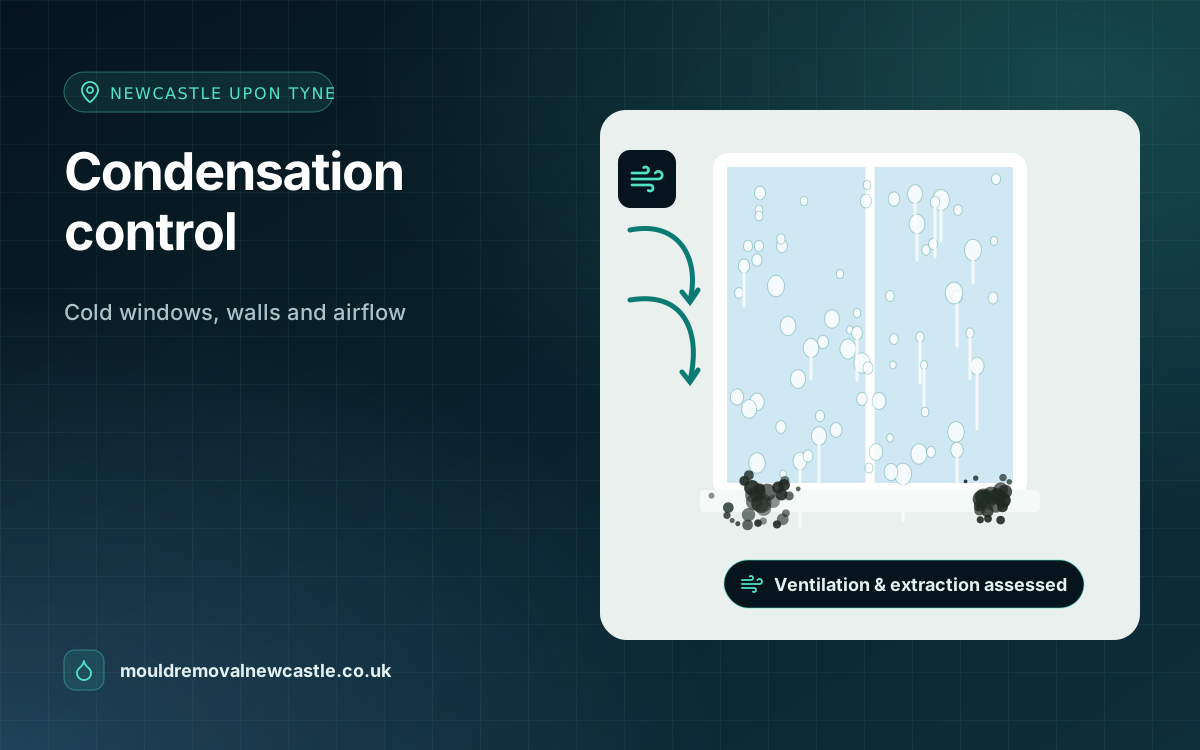
Condensation forms when warm, moist air meets a cold surface and turns back into water. A little on the windows first thing in the morning is common, but when it happens every day it soaks into window reveals, wall corners and ceilings, and mould soon follows. Condensation control is about understanding why that moisture is not escaping and what can be changed so it no longer settles on cold surfaces.
Signs Condensation Is Behind Your Damp and Mould
Condensation tends to leave a recognisable pattern. These are some of the most common signs:
- streaming windows and puddles on sills, especially in the morning
- black spots in the corners of bedrooms and along ceiling edges
- mould behind wardrobes, beds and sofas against external walls
- damp, peeling paint on bathroom and kitchen ceilings
- a musty smell in cupboards and rooms that are rarely heated
Similar marks can also be caused by leaks or rain getting through external walls, which is why an assessment matters before deciding on a fix.
Why Does Condensation Build Up Indoors?
In most properties, condensation comes from a combination of moisture produced indoors and surfaces cold enough for it to settle on.
Everyday Moisture
Cooking, bathing, showering, boiling the kettle and drying washing indoors all release water into the air. In a busy household, this adds up quickly. If the moist air has nowhere to go, it moves around the property until it finds a cold surface.
Cold Walls, Windows and Corners
External walls, window reveals and the corners where walls meet ceilings are often the coldest parts of a room. Many older terraced and period homes in Newcastle have solid walls that stay cold through the winter, which makes them more prone to condensation.
Weak Extraction and Limited Airflow
Extractor fans that are underpowered, switched off or blocked leave steam in kitchens and bathrooms. Closed trickle vents, sealed-up rooms and furniture pressed against walls also stop air moving, so damp patches form in the same places year after year.
Practical Measures We May Recommend
Every property is different, so recommendations depend on what the assessment finds. They usually fall into a few areas.
Better Extraction in Kitchens and Bathrooms
Removing steam at the source is often the biggest single improvement. Mould Removal Newcastle can advise whether existing extractor fans seem to be doing their job, how long they should run after cooking or showering, and where an improvement to extraction would help. Steamy rooms are covered in more detail on our bathroom and kitchen mould page.
Ventilation and Airflow
Opening trickle vents and airing rooms after cooking, bathing or drying clothes help moist air escape before it settles. Moving furniture a short distance away from external walls lets warm air reach the surface behind.
Heating Patterns and Cold Surfaces
Rooms that are heated briefly and then left cold are prone to condensation. Steadier, more even heating can keep surfaces warmer. Where particular walls or reveals stay very cold, we can discuss ways of dealing with those cold surfaces. Wider growth on walls and ceilings is handled through our black mould removal service.
Condensation Control for Homes, Rentals and Businesses
Homeowners across Newcastle and the surrounding towns use the service when condensation has become a seasonal routine of wiping windows and scrubbing corners. Offices, shops and other workplaces can be assessed too, and our commercial mould removal page explains how that works.
Tenants worried about damp and mould can get in touch as well, and should report the problem to their landlord. Landlords and letting agents often need to know whether mould comes from condensation or a building defect before deciding what to do, which our landlord mould service is set up to help with.
If anyone at home has asthma, allergies or a respiratory condition, recurring condensation mould is worth dealing with early. Take extra care around affected areas and seek medical advice if you are worried.
What Affects the Cost of Condensation Control?
The price depends on how many rooms are affected, the size of any mould growth to treat, access, whether an inspection is needed and whether materials need drying, removing or replacing. Photographs sent with your enquiry help us give an initial view. Our guide to mould removal pricing explains these factors in more detail.
Why Choose Mould Removal Newcastle?
Advice is based on how your property is actually used and heated, so it is something you can act on day to day. Changes the property doesn't need won't be recommended, and if the cause turns out to be a leak or defect, we explain what needs repairing.
Areas We Cover Around Newcastle
Mould Removal Newcastle covers Newcastle upon Tyne and nearby towns, including South Shields, Sunderland, Wallsend, Gateshead, North Shields and Cramlington. Homes near the coast can be more exposed to wind-driven rain, which is one reason we check for water ingress as well as condensation. If you're elsewhere, include your postcode and we'll confirm coverage.
Request a Free Condensation Control Quote
Fill in the quote form or visit our contact page. Tell us which rooms are affected, when the condensation is worst and whether mould has formed. Photographs of windows, walls and any extractor fans are very helpful.