
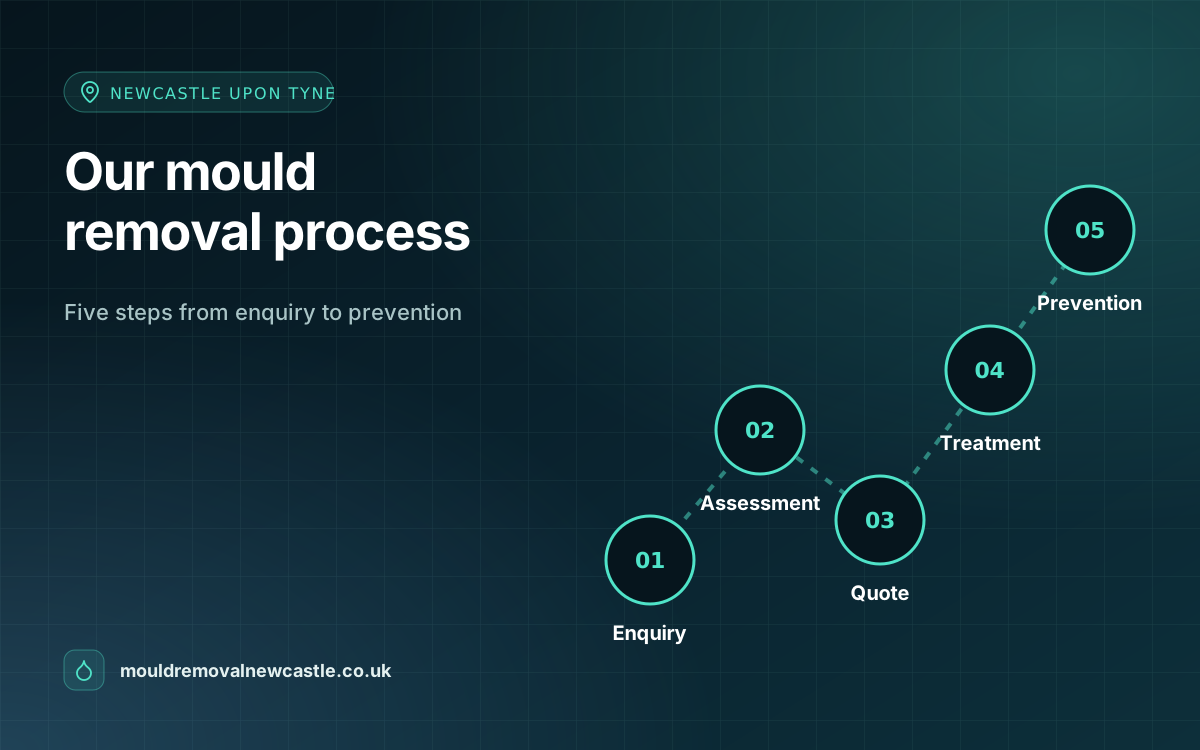
Knowing what will happen makes it easier to plan around the work and to understand what you are paying for. The steps below explain how a typical job runs, what you will be asked for and what you receive at each stage. Smaller jobs can move through some steps quickly. Larger or recurring problems need more investigation before treatment starts.
How the Mould Removal Process Starts
Sending Your Enquiry
The process begins when you send an enquiry through the quote form or our contact page. Tell us the property postcode, the type of property and the rooms where mould has appeared. It also helps to mention how long it has been there and whether it has come back after cleaning or painting.
Talking It Through and Sending Photographs
Next, we talk through what you have found. Photographs are useful at this stage, ideally a close-up of the growth, a wider shot of the wall or ceiling, and pictures of nearby windows, extractor fans or any water staining. From this, Mould Removal Newcastle can often judge the likely scale of the job and the possible causes, and tell you whether the work can be priced without a visit.
An Inspection and Assessment Where Needed
Some problems cannot be judged from pictures. Widespread growth, mould in more than one room, repeat outbreaks and water staining all suggest an inspection is the sensible next step. The assessment looks at how far the growth has spread, which materials are affected and where the moisture is coming from. Our mould surveys and inspections page explains this stage in more detail.
Your Free Quotation
Once the problem is understood, you receive a free quote that sets out the areas to be treated, the proposed treatment, any materials that need removing and replacing, and our findings on the cause. If a repair needs arranging separately, the quote makes that clear. The mould removal cost page explains the factors that shape the price.
Carrying Out the Mould Treatment
Treating the Affected Areas
Treatment depends on the material. Non-porous surfaces, for example uPVC window frames, ceramic tiles and glass, can usually be cleaned and treated where they are. Badly affected porous materials behave differently, because mould can grow into them. Plasterboard, some plaster, wallpaper and sealant in this condition may need removing and replacing. For dark growth on walls and ceilings, our black mould removal page covers the treatment in more depth.
Precautions During the Work
On larger areas, suitable precautions are taken to reduce exposure and avoid spreading spores into other rooms while the work is carried out. Affected materials are handled and removed carefully. If anyone at home has a respiratory condition, mention it when you enquire so the work can be planned around them.
Dealing With the Cause of the Damp
Explaining the Cause and Recommending Next Steps
Treating mould without dealing with the moisture leaves the door open for it to return. So alongside the treatment, Mould Removal Newcastle explains what is causing the damp and what should be done about it.
Where condensation is the cause, you'll get practical recommendations, such as improving extraction in a steamy bathroom or kitchen, better ventilation, adjusting heating patterns, keeping airflow around furniture on external walls and dealing with cold surfaces. Our condensation control service covers this in detail.
If the moisture is coming from a leaking pipe, a damaged roof, a blocked or broken gutter, or rain getting through the brickwork, we will tell you what needs repairing so you can book the right trade. Until that repair is done, the treated area can't be expected to stay clear.
What Happens After the Work Is Finished?
Keeping an Eye on Things After the Job
When the work is complete, you will know what was treated, what was removed and what still needs attention. Keep an eye on the treated areas, particularly through the colder months when condensation is at its worst. If you notice new marks appearing, or a recommended repair has not yet been carried out, get in touch and we can talk it through.
What You Can Do Before Treatment Starts
A few simple steps help while you wait for the work. Avoid painting over the mould, as it hides the problem and often shows through again. Try not to dry-brush or scrape large areas, which can disturb spores. Keep rooms aired where you can, use extractor fans when cooking or showering, and move furniture slightly away from cold external walls. Taking photographs now also gives a useful record of how the problem looks before treatment.
How the Process Works for Landlords and Businesses
For rented homes, the same steps apply, with access arranged around the tenants living there. Reports of damp and mould should be dealt with promptly, and the cause investigated rather than put down to the tenants. Our landlord mould removal service explains how we work with landlords and letting agents.
On business premises, the work is planned around staff, customers and the way the building is used. Our commercial mould removal page covers offices, shops and other workplaces.
Why a Cause-First Process Gets Better Results
Many people contact us after cleaning the same patch of mould several times. Shop-bought sprays can make a hard surface look clean for a while, yet growth inside plaster or sealant survives and the source of moisture is untouched. A process that assesses the problem, treats it properly and explains the cause gives the treated area a much better chance of staying clear.
Start Your Mould Removal With a Free Quote
Mould Removal Newcastle covers Newcastle upon Tyne and nearby towns listed on our areas we serve page. To begin, send your details and a few photographs through the form at the top of the page. We'll come back to you and say whether the job can be priced from your information or needs an inspection first.